
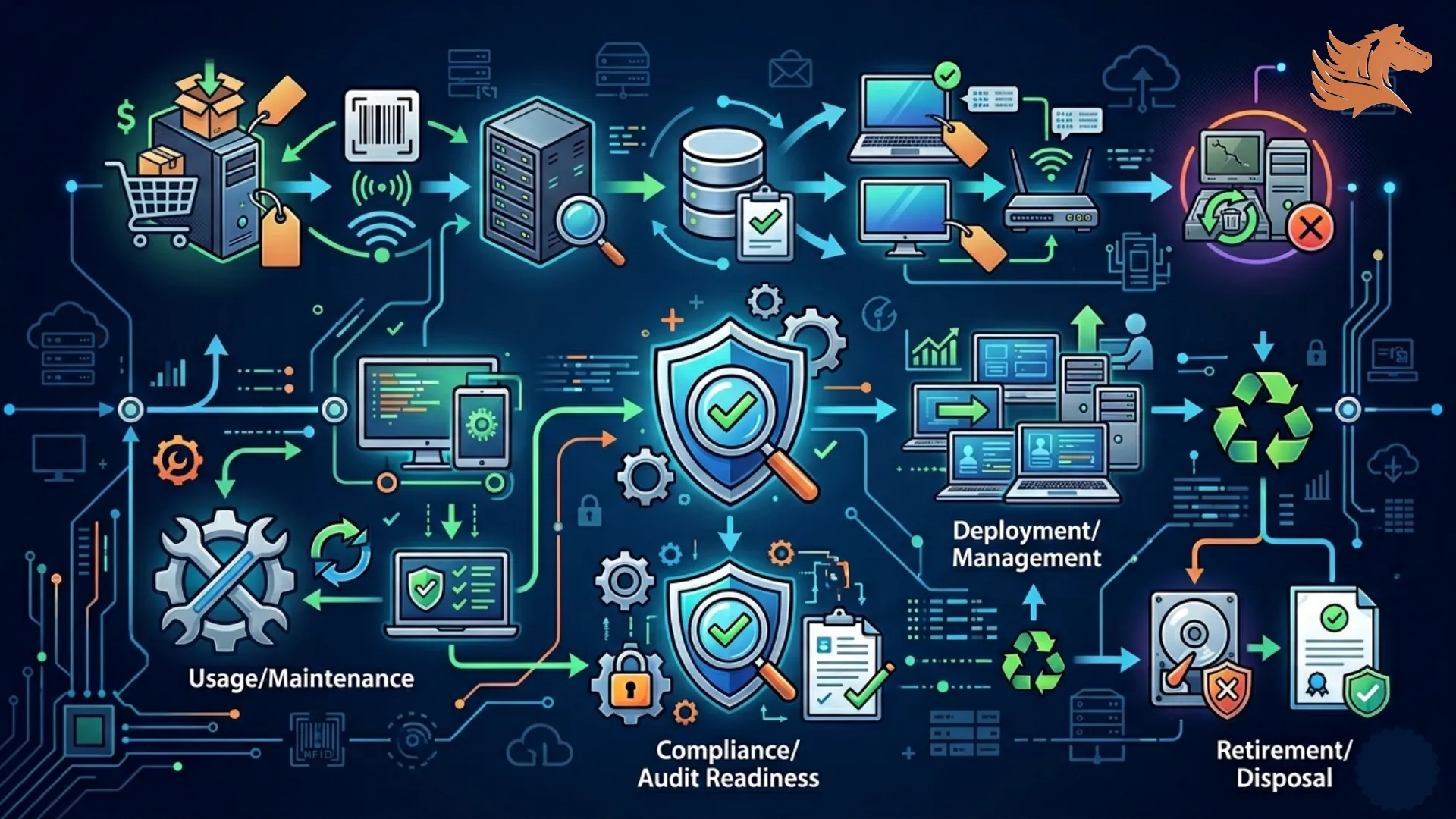
Asset Condition & Lifecycle Tracking Software: Track Condition, Warranty, Insurance & Maintenance in One Place. Most businesses think they’re managing assets. They’re actually managing spreadsheets. Here’s what real asset condition and lifecycle tracking looks like — and why AssetPegasus was built to close every gap.
What’s covered
- The 6 asset conditions — and what each one means for your budget
- Warranty management: the coverage you’re already missing
- Insurance and asset condition — why they’re inseparable
- Maintenance management: repair vs. replace with real numbers
- Software assets: renewals, seats, and the licenses nobody’s using
- What to look for in asset lifecycle tracking software
Asset condition is a financial signal — not a dropdown
Open almost any asset register and you’ll find the same problem. A laptop marked New that’s been repaired twice. A server listed as Active with an expired warranty. A device reported stolen three weeks ago still sitting in the register as In Use. Equipment marked Used with no repair history, no cost data, and no renewal dates attached.
These aren’t data entry mistakes. They’re the predictable result of treating asset condition as a label — something you update manually when you remember, or when something breaks. AssetPegasus is built on a different premise: every condition change is a financial event. It changes your cost exposure, your insurance position, your warranty eligibility, your replacement timeline, and your compliance standing — all at once.
1. The 6 asset conditions — and what each one means financially
Every hardware and software asset in AssetPegasus moves through six condition states across its full lifecycle. Here’s what each one means operationally and financially:
Here are the six conditions your assets cycle through, and what each one should be triggering in your system:
New
Full warranty active. Depreciation clock starts. Insurance coverage begins. This is the only moment your asset data is guaranteed to be accurate — don’t waste it.
Used
Asset is live and depreciating. Maintenance history accumulates. Renewal and warranty expiry dates are ticking. This is the longest phase — and the one where data goes stale fastest.
Repair In
Asset is offline. A repair cost is accruing. Critically — is this repair warranty-eligible? Most teams never check, and pay for repairs that should have been free.
Repair Out
Asset is back. The repair cost is now part of its total cost of ownership. The lifecycle expectancy may need revising. Redeployment should be logged against a named user or location.
Stolen
This is a loss event, not just a status change. Insurance claim. Remote wipe. License reclamation. Replacement requisition. Every minute the asset stays “Active” in your register is a security and financial risk.
Damaged
Repair or write-off? That decision needs real numbers — current repair cost vs. remaining asset value vs. replacement cost. Without your full cost history, you’re guessing.
2. Warranty management: the coverage you’re already losing
Two warranty problems cost organisations money every single week. The first is sending an asset to a paid repair shop when it’s still under manufacturer warranty. The second is letting a warranty expire without deciding whether to extend it — then getting hit with an out-of-warranty repair bill three months later.
Both are entirely preventable. AssetPegasus attaches warranty start date, expiry, and terms to every asset at onboarding. The moment an asset moves to Repair In, the system checks warranty coverage automatically. No hunting through email inboxes for original invoices. No calling the vendor to find out if you’re still covered.
| Warranty event | Without tracking | With asset lifecycle software |
| Asset sent for repair | Team calls repair shop, nobody checks warranty status | System flags warranty coverage before repair is approved |
| Warranty expiring in 30 days | Nobody knows until it’s already lapsed | Automated alert at 60, 30, and 7 days out |
| Asset damaged — warranty claim | Team searches emails for original invoice and warranty doc | All docs attached to the asset record — claim raised in minutes |
| Warranty extended / renewed | Updated in a spreadsheet that 3 people maintain differently | Single record updated, history logged, new expiry alert set |
3. Insurance and asset condition — why they can’t live separately
Your insurance policy was priced on the asset register you submitted at renewal. If assets have since been damaged, stolen, or their condition has materially changed — and your register doesn’t reflect that — you have a coverage mismatch. Your insurer may not honour a claim in full if your declared asset values are inaccurate.
With AssetPegasus, every condition change that has insurance implications — Stolen, Damaged, major Repair Out events — surfaces to your insurance dashboard immediately. You can generate an up-to-date asset schedule for your insurer at any point in the year, with current condition, current declared value, and full history. Not just at renewal.
For industries with strict compliance requirements — healthcare, manufacturing, construction — AssetPegasus is GDPR and HIPAA compliant, so your asset data is handled to the same standard as your most sensitive operational data. See how we support healthcare asset tracking specifically.
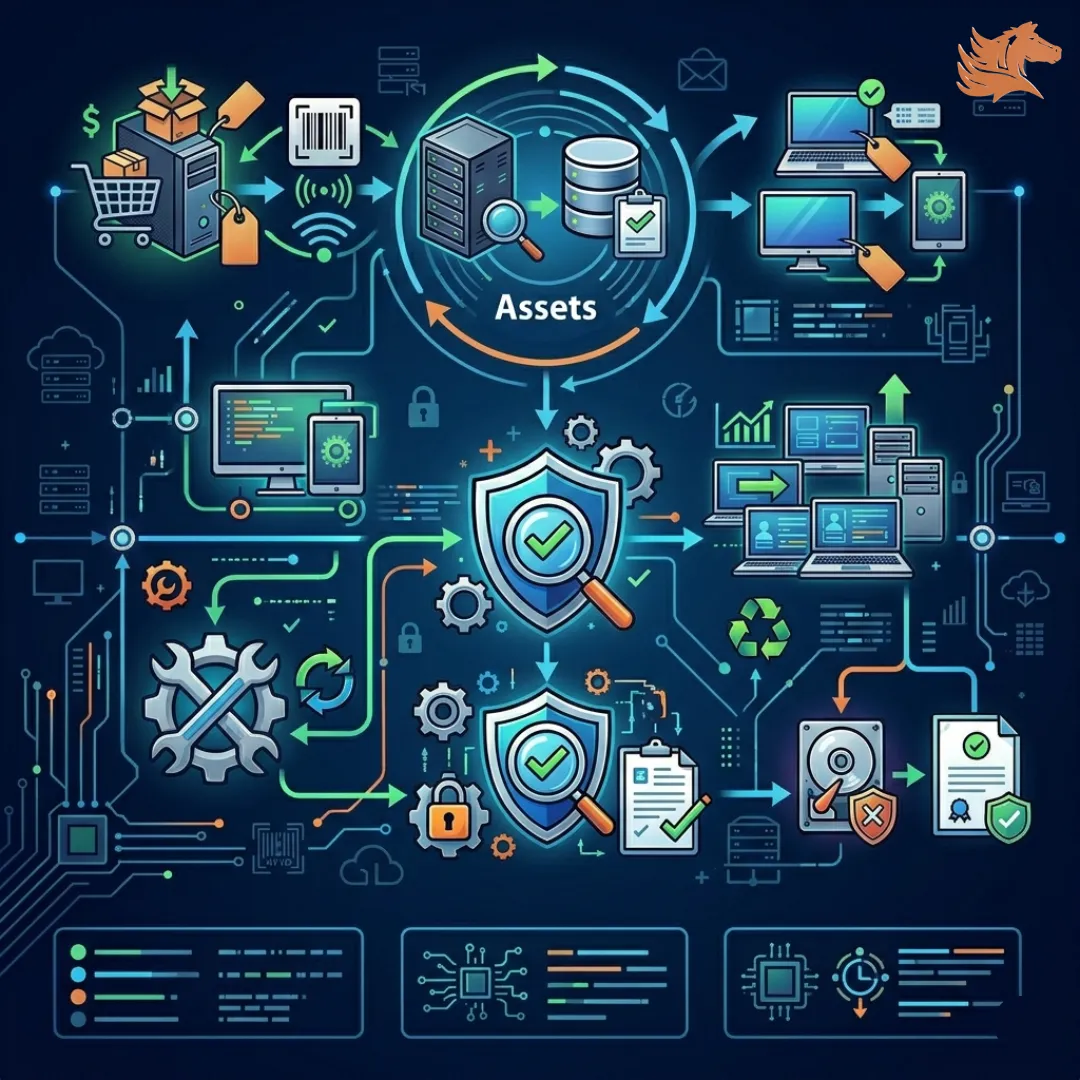
4. Maintenance management: make the repair-vs-replace call with real numbers
Every maintenance event — a repair, a part replacement, a service visit — should be logged against the asset, not just against a helpdesk ticket. Because the question you’ll eventually need to answer isn’t “what did this repair cost?” It’s “what has this asset cost me in total, and does it make financial sense to keep it?”
AssetPegasus answers that question automatically. Every maintenance event logged against an asset updates its cumulative repair cost. When that figure crosses a configurable threshold relative to the asset’s original value, the platform flags it for a replace review — before you approve one more expensive repair on hardware that should have been retired six months ago.
Maintenance threshold example
The 40% rule — when repair stops making sense
A common financial threshold: when cumulative repair costs exceed 40% of the original purchase price, replacement is almost always cheaper over a 3-year horizon. Asset lifecycle software surfaces this automatically — flagging assets that have crossed the threshold so the decision gets made proactively, not after one more expensive repair.
What maintenance tracking gives you
Full repair history
Every service event logged with cost, date, vendor, and parts. Never lose maintenance history when a device changes hands.
Scheduled maintenance
Set recurring maintenance schedules per asset type. Get alerts before service is due, not after it’s overdue.
Cumulative repair cost
See total maintenance spend against original purchase price. Surface the replace-threshold automatically.
5. Software assets: renewals, seat counts, and the licences nobody’s using
Hardware gets the attention. Software quietly bleeds the budget.
Subscription renewals auto-trigger. Seat counts drift above actual usage. Tools that teams stopped using six months ago keep renewing because nobody owns the decision to cancel. And when hardware is decommissioned, the software licences attached to it — if nobody notices — either go to waste or stay live on a machine that no longer exists.
Common scenario
32 seats. 9 active users. Renewing in 11 days.
A 160-person company is paying for 32 seats of a project management tool. Usage data shows 9 people logged in during the past 90 days. The annual renewal is in 11 days. Without a system surfacing this, it auto-renews at full price. With licence tracking, the renewal triggers a review — and the company drops to 10 seats, saving £6,800 a year.
AssetPegasus tracks every software asset — SaaS, desktop applications, server licences, SSL certificates, domain renewals — with seat counts, active usage visibility, cost per seat, and renewal date alerts. Every licence is linked to the hardware it’s deployed on. When that hardware is decommissioned or stolen, the linked licences automatically flag for reassignment or cancellation. No manual cross-referencing. No orphaned licences quietly renewing forever.
6. What to look for in asset condition & lifecycle tracking software
Not all asset management tools are built for this depth of tracking. Here’s what separates purpose-built lifecycle software from a digital spreadsheet with a nicer interface:
| 6-state condition tracking with automated triggers | Condition changes should drive actions, not just update a field |
| Total cost of ownership per asset | Purchase + repairs + insurance + support = real cost. Not just book value. |
| Warranty tracking with expiry alerts | Proactive — 60/30/7 day alerts before expiry, not after |
| Insurance schedule generation | Up-to-date asset schedule with condition and value for renewals and claims |
| Maintenance history per asset | Every repair tied to the asset for lifetime, not just to a ticket |
| Software licence management | Seat counts, usage visibility, renewal alerts, hardware linkage |
| Hardware + software in one register | Licences follow hardware — decommission a device, flag its software |
| Stolen/damaged workflows | Loss events trigger insurance and replacement flows automatically |
One system. Every asset. Complete visibility.
The traditional split — hardware tracked in one tool, software in another, insurance in a spreadsheet, maintenance in helpdesk tickets — creates a system where no single person has a complete picture of any asset. When a device is repaired, nobody checks if it’s warranty-eligible. When it’s stolen, nobody reclaims the licences. When it’s retired, nobody cancels the support contract.
AssetPegasus is built as a unified platform — hardware, software, warranty, insurance, maintenance, and renewal data all linked to a single asset record. AssetPegasus is available as cloud, hybrid, or on-premise deployment, is GDPR and HIPAA compliant, and starts with a 1 Month free trial — no card required.
Whether you’re managing IT assets in a corporate office, machinery on a manufacturing floor, equipment across healthcare facilities, or devices across a school network, AssetPegasus gives every team the same visibility from a single dashboard. .
Frequently asked questions about asset condition & lifecycle tracking software
📜
- Preventative Maintenance for Critical Healthcare Equipment: Avoiding ICU Downtime
- Multi-Plant Equipment Management: End the Chaos
- Medical Equipment Lifecycle Management: A HIPAA-Compliant Guide to Preventing Lost Assets
- How Poor Asset Management Increases Operating Costs
- How Businesses Lose Insurance Claims Due to Missing Asset Records