
Multi-Plant Equipment Management gets chaotic fast without the right system. See how manufacturers get real-time visibility across every facility.
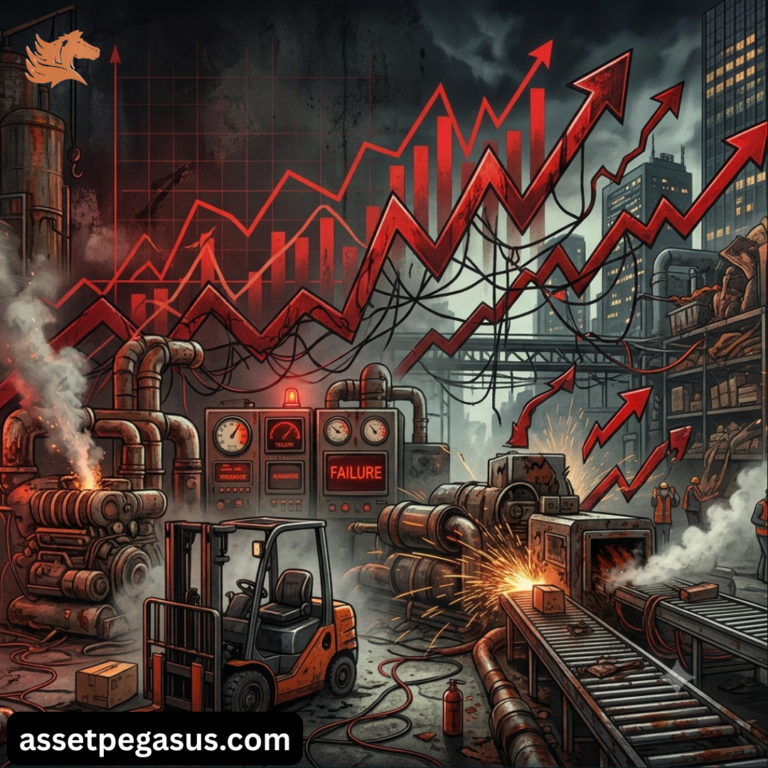
Most manufacturers quietly bleed money not on the factory floor, but in the gap between what one plant thinks it owns and what’s actually there. A CNC machine gets “borrowed” between two facilities and never logged. A forklift shows up on Plant A’s asset list and Plant C’s spreadsheet at the same time. A calibration deadline gets missed because nobody at the receiving plant knew the equipment had a service history at all.
None of this looks like a crisis in the moment. It looks like normal operations until the year end audit, the insurance claim, or the production line that goes down waiting on a part that was “supposed to be here.”
This is the reality of running equipment across multiple plants without a centralized system: everyone is technically tracking something, and nobody has the same picture.
Why Multi-Plant Equipment Chaos Happens
It’s rarely one big failure, it’s a stack of small, reasonable-seeming gaps that compound.
Disconnected Systems Per Location
Each plant manager builds their own tracking habits, a spreadsheet here, a whiteboard there, a maintenance log in someone’s inbox. Individually, these work fine. Across five or ten locations, they create five or ten different versions of the truth, and nobody owns the master record.
Equipment That Moves Between Facilities
Manufacturing equipment isn’t static. Tools, machinery, and mobile assets get transferred between plants to cover demand spikes, seasonal shifts, or urgent repairs elsewhere. Every transfer without a digital handoff record is a point where custody and accountability quietly disappears.
No Shared Maintenance Calendar
A machine serviced at Plant A and then moved to Plant B often arrives with no visible maintenance history. The receiving team either re-inspects from scratch (wasted time) or assumes it’s fine (real risk) because the calibration and service records never traveled with the asset.
Manual Reconciliation at Audit Time
Without a live, centralized system, “true-up” only happens once a year, during a physical count, an insurance review, or an ISO audit. By then, discrepancies have been quietly accumulating for months, and reconstructing what actually happened is close to guesswork.
What This Actually Costs Manufacturers
The financial impact of multi-plant chaos rarely shows up as a single line item — it’s spread across several:
- Duplicate purchases – Plant A buys new equipment because nobody could confirm Plant B had an idle unit sitting unused
- Unplanned downtime – production halts while staff search for a tool or machine that’s technically “in the building,” just not the right one
- Missed maintenance windows – equipment that traveled between plants without its service record falls out of preventive maintenance schedules, increasing breakdown risk
- Failed or delayed audits – ISO, insurance, and internal compliance reviews stall when asset records don’t match physical reality
- Labor hours lost to searching -plant staff routinely report spending hours per week simply locating equipment that should be trackable in seconds
Individually, each of these looks manageable. Added up across a fiscal year and multiple locations, they represent one of the largest and most avoidable operational cost centers in manufacturing.

What Real Multi-Plant Visibility Requires
Solving this isn’t about tightening spreadsheet discipline, it’s about removing the need for manual reconciliation altogether. A system built for multi plant equipment management needs to do a few things well:
1. One Centralized Asset Database Every plant feeds into the same live system not five separate spreadsheets that someone reconciles quarterly. One asset, one record, regardless of which facility currently holds it.
2. Real-Time Location & Status Tracking QR code scanning or similar mobile check-in/check-out means equipment location updates the moment it moves not whenever someone remembers to update a log.
3. Digital Transfer Records Every inter-plant transfer is logged with who moved it, when, and to where turning “we think it’s at Plant C” into a verifiable, timestamped record.
4. Maintenance History That Travels With the Asset Calibration schedules, service records, and warranty status stay attached to the equipment itself, not to whichever plant happened to service it last so the receiving facility always has the full picture.
5. Centralized, Automated Alerts Upcoming maintenance, expiring warranties, and overdue inspections should trigger notifications automatically across every location not depend on each plant manager remembering independently.
6. Audit-Ready Reporting on Demand When ISO auditors, insurers, or leadership ask “where is everything and what’s its condition,” the answer should be a report generated in minutes not a multi-week reconciliation project.
This is exactly the gap AssetPegasus’s Manufacturing Asset Management software is built to close, a single, cloud-based platform where every plant works from the same live asset record instead of its own disconnected system.
A Multi-Plant Equipment Checklist
Use this to gauge how exposed your current process is:
- All plants use one shared, centralized asset system (not separate spreadsheets)
- Every inter-plant equipment transfer is logged digitally with timestamp and owner
- Maintenance and calibration history travels with the asset, not the originating plant
- Real-time location tracking exists for high-value or frequently moved equipment
- Automated alerts flag overdue maintenance and expiring warranties across all locations
- Audit-ready reports can be generated on demand, without a manual reconciliation project
- A documented process exists for what happens when equipment goes missing at any plant
If several of these are unchecked, the “chaos” isn’t a future risk — it’s already running in the background of daily operations.
The Bottom Line
Multi-plant equipment problems don’t announce themselves. They show up as a slightly-too-high maintenance bill, a slightly-too-slow audit, a slightly-too-common “let me check with the other plant” until eventually those small frictions add up to real, measurable cost.
The fix isn’t asking plant managers to be more diligent with spreadsheets. It’s removing the need for manual reconciliation entirely, with one live system every facility feeds into automatically. When every plant is working from the same real-time record, “chaos” stops being the default state of running equipment across multiple locations.
FAQs
Tired of reconciling five different spreadsheets to figure out where your equipment actually is? See how AssetPegasus’s Manufacturing Asset Management gives every plant one shared, real-time view →
AssetPegasus is built by Socialfly, and offers a 1 Month free trial with no credit card required.
📜