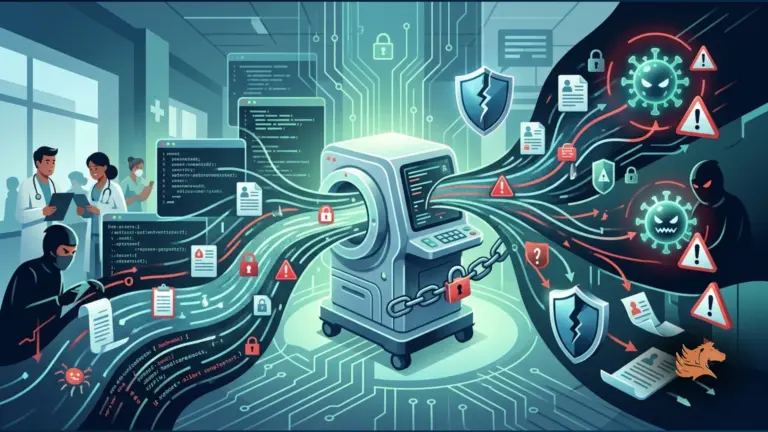
Why 2026 Scammers No Longer Break In, They log in because old methods are gone, Scammers needed to write complex long code to break software security. In 2026, the front door is open, and they’re walking straight through it quietly, along with valid credentials. The “Breaking In” is being replaced by more simpler way “Logging In.” 📉
The cybersecurity landscape has fundamentally changed, it implies that having the newest antivirus software and a strong firewall are no longer sufficient for businesses. Your teams login screens and the vast ecosystem of digital assets they have access and become the battlefield instead of your network perimeter.🛡️⚠️
The Golden Keys: How They Get In 🔑💻
So, how are these “Logins” obtained? The methods have become more advanced & tricky, moving beyond the easily spotted phishing emails of the past.
- AI-Powered Phishing & Deepfakes 🎭🤖 : Scammers now use generative AI to craft flawless, personalized messages. More alarmingly, they use deepfake audio and video to impersonate CEOs or IT managers, tricking employees into revealing credentials or even approving fraudulent wire transfers.
- Session Hijacking & “Living-Off-the-Tenant” Attacks 🍪👻: Why bother with passwords if you can steal an active session? Attackers are increasingly using infostealer malware to harvest valid session cookies and authentication tokens from compromised devices . With these, they can bypass login screens and MFA entirely, effectively becoming the user . Once inside, they don’t deploy malware; instead, they “live off the tenant” by abusing legitimate tools like the Microsoft Graph API, OAuth applications, and third-party integrations (like CRM or e-signature tools) to move laterally and steal data . This activity is incredibly hard to detect because it uses native, trusted cloud features and looks like normal business operations.
- Credential Stuffing🔄🔐: With billions of credentials available on the dark web from previous data breaches, automated bots “stuff” these username-password combinations into thousands of websites, exploiting the common human flaw of password reuse.
- MFA Fatigue 📱😫: Attackers who have a password can trigger a flood of MFA push notifications to a user’s phone. Hoping the user will either accidentally approve it or get so annoyed they approve it just to make it stop, the attacker finally gets the “login” they need.
- Adversary in the Middle (AITM) Phishing Kits 🎣⚡: Forget crude phishing emails with misspelled URLs. In 2026, scammers are using commercial-grade phishing kits like “Starkiller,” sold as a subscription service on the dark web . These kits act as a real-time proxy between the user and a legitimate site like Google or Microsoft. When a victim enters their credentials and even their MFA code, the kit forwards that information to the real site in real-time, logging the attacker in simultaneously. Because the user is interacting with a proxied version of the actual site, everything looks legitimate, and their MFA challenge is satisfied, handing the attacker a golden ticket.
- Vishing (Voice Phishing) & Help Desk Impersonation 📞🎭 : Sometimes, the easiest way to get a login is to simply ask for it. Threat actors, including groups like those tracked by Mandiant as UNC6661, are now extensively using vishing . They call employees, often spoofing internal phone numbers, and impersonate IT staff. The pretext might be helping to “fix an MFA issue” or “set up a new security feature” like a passkey. During the call, they direct the victim to a credential-harvesting site or even have them read out a one-time passcode (OTP) sent to their phone, giving the attacker immediate access . This method is highly effective because it preys on the human instinct to trust a helpful voice on the phone.
- Browser-in-the-Browser (BitB) & Fake OS Popups 🖥️🎭: Attackers are now exploiting the very fabric of the web. The Browser-in-the-Browser (BitB) technique involves creating a fake pop-up login window that appears over a legitimate website . This pop-up can even display a realistic URL, tricking even vigilant users. Taking this further, attackers are creating sophisticated phishing sites that simulate native operating system login prompts . In one campaign, a fake news article site ran a script that silently logged the user out of their Microsoft account in another tab. When a convincing Windows-style popup appeared asking them to “log back in,” the user, seeing they were genuinely logged out, complied without suspicion
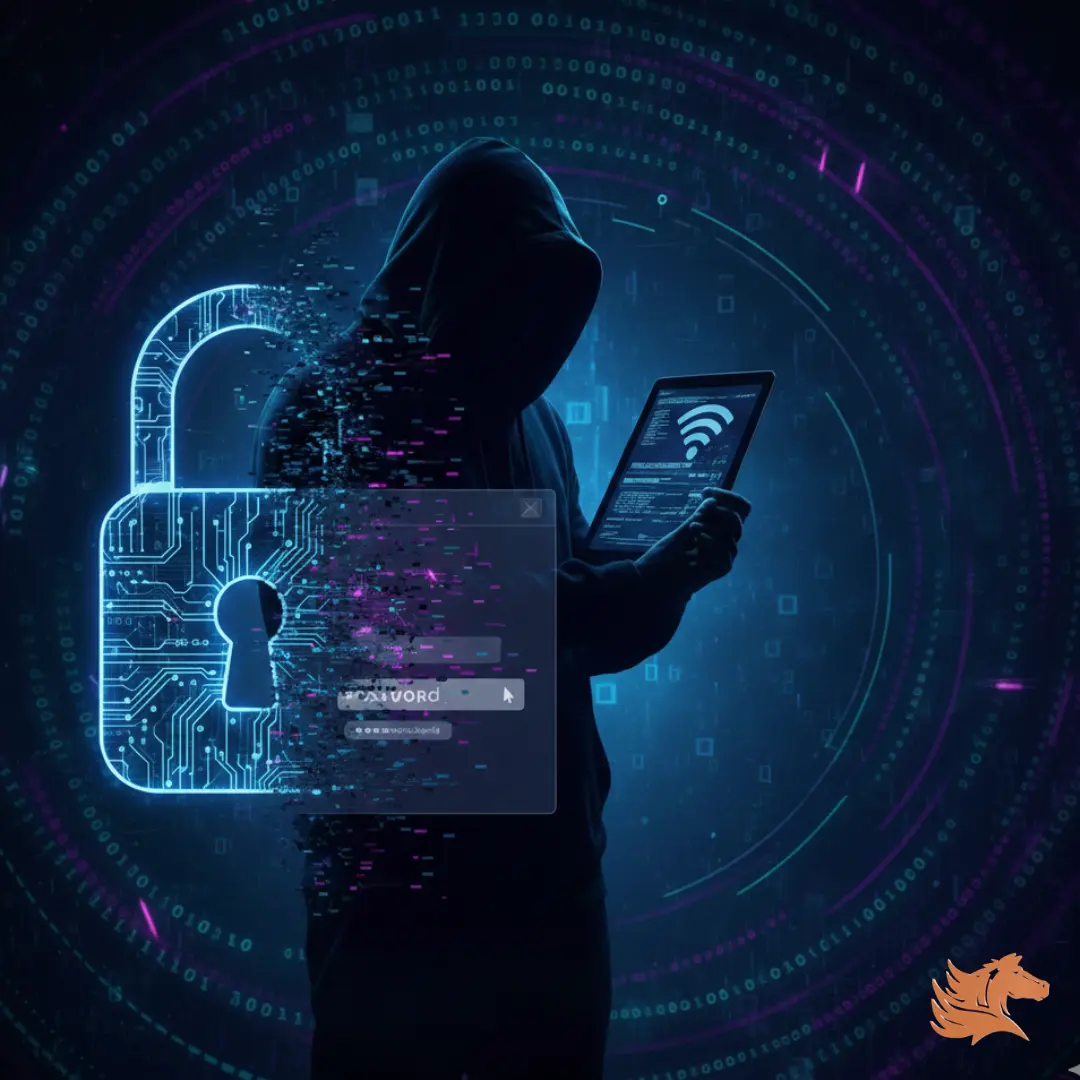
What Happens After They “Log In”?🕵️♂️💰
Once inside, they don’t steal data in a noisy, detectable way. They lurk. They use legitimate tools like PowerShell or other system administration features to move laterally across your network. They study your environment, looking for high-value assets: financial data, intellectual property, and customer databases. Because they are using valid credentials, their activities often blend in seamlessly with normal network traffic, making them incredibly difficult for traditional security tools to detect.🔍🤫
The New Security Perimeter: Your Asset Management🛡️📊
This new reality requires a new defense strategy. You cannot protect what you cannot see. This is why IT Asset Management (ITAM) has moved from an IT convenience to a critical security pillar in 2026. A modern ITAM strategy provides the visibility and control needed to disrupt the “login” attack chain.
Here’s how a robust IT Asset Management strategy fortifies your defenses 🛡️✅:
- Eliminates Shadow IT 🌑➡️☀️: You can’t secure credentials for assets you don’t know exist. ITAM discovers and tracks all hardware, software, and cloud services, bringing shadow IT into the light where it can be properly secured and managed.
- Accelerates Threat Remediation ⏱️🚨: When a compromised credential is detected, you need to know instantly which systems that user can access. An ITAM system provides a real-time map of user access and asset relationships, allowing you to contain a breach in minutes instead of days.
- Enforces Least Privilege & Lifecycle Security 🔐📋: By tracking asset ownership and usage, you can ensure users only have access to the systems they need. Furthermore, ITAM automates the deprovisioning of accounts and the secure retirement of old assets, preventing “orphaned” accounts or forgotten devices from becoming easy targets.
- Proactive Risk Alerts ⚠️🔔: Modern ITAM tools can flag outdated software with known vulnerabilities or identify unauthorized devices attempting to connect to your network, stopping attackers before they can even try to log in.
- Automated License Compliance 📝✅: By tracking software licenses and renewals automatically, you eliminate the risk of using outdated, unpatched software versions that attackers love to exploit.
- Complete Asset Lifecycle Visibility 🔄👁️: From procurement to retirement, knowing exactly where every asset is—and who owns it—means no forgotten devices with active credentials are left vulnerable.
Your First Line of Defense in the Login Era 🏰🛡️
The scammers are evolving. They’re taking the path of least resistance, and that path is a valid set of login credentials. To fight back, you need a strategy built on complete visibility and proactive control. You need to know exactly what IT assets you have, who is using them, and how they are configured—because in 2026, a well-managed asset is a secure asset.
To truly combat this new breed of cyber threat, you need a solution that provides a complete, real-time picture of your entire IT ecosystem. Asset Management Software is designed to be your first line of defense in this new era. By offering a centralized platform to track every hardware, software, and cloud asset across its full lifecycle, it empowers you to eliminate shadow IT, automate security alerts for outdated or unauthorized systems, and enforce critical security protocols with ease. It transforms asset management from a simple inventory task into a powerful security tool, ensuring that when scammers come looking for an open door, they find a fortress where every single login is monitored, managed, and secure.🏰🔒✨
📜